High-Elevation Viticulture in Northern California: How Big Valley AVA Elevates Sauvignon Blanc Wine Grapes
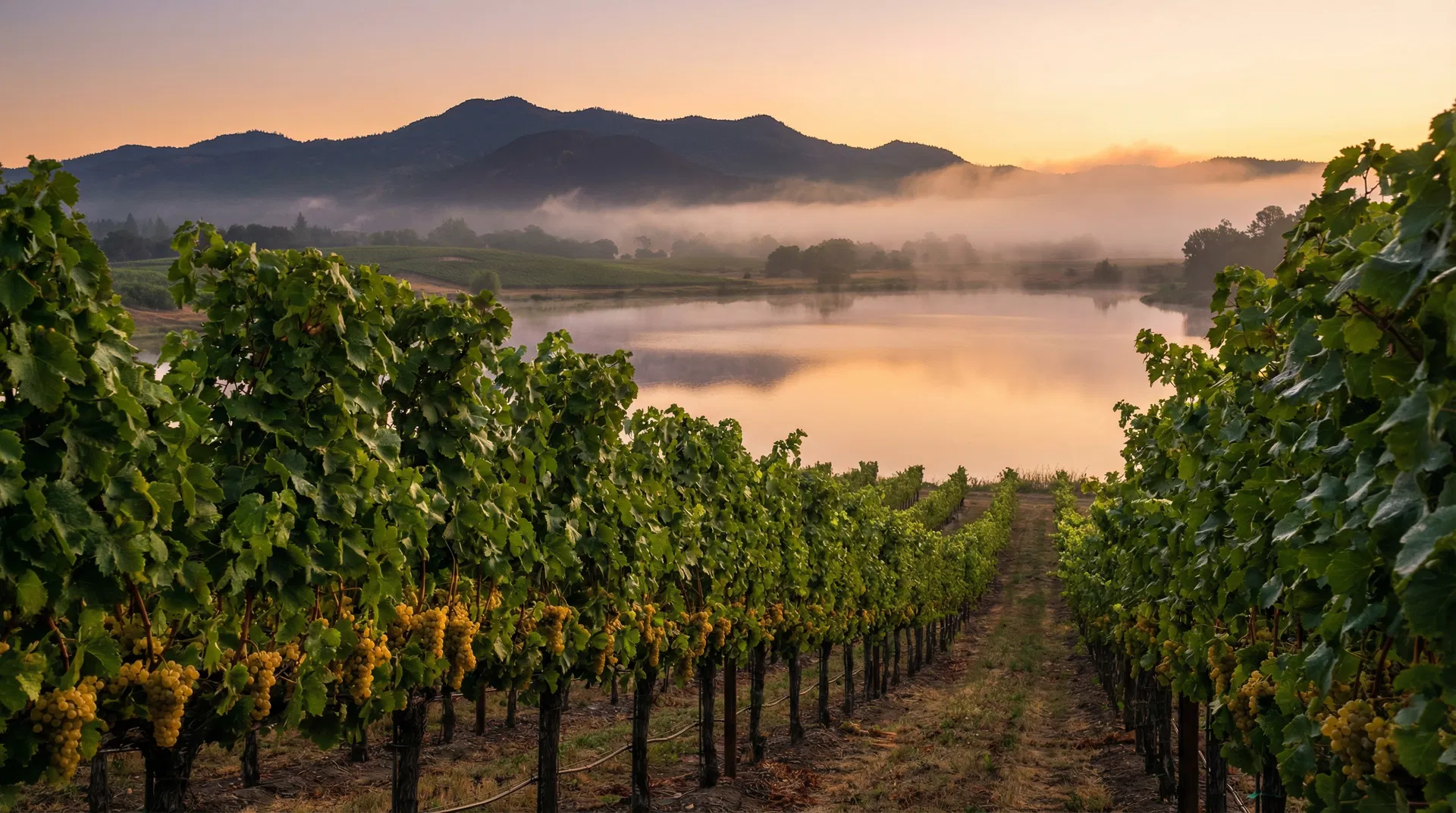
At 1,329 feet above sea level, the vineyards of Big Valley District AVA experience a fundamentally different growing environment than the valley floors of Napa and Sonoma. Elevated UV, coastal breezes, and the thermal influence of Clearlake combine to produce Sauvignon Blanc of exceptional freshness and concentration.
Elevation as a Quality Factor
In the world's great wine regions, elevation is consistently associated with quality. The mountain vineyards of Alto Adige in northern Italy, the high-altitude Malbec vineyards of Mendoza's Luján de Cuyo, the elevated sites of Burgundy's Côte d'Or — in each case, altitude plays a defining role in shaping the character of the wine.
The reasons are both physical and chemical. At higher elevations, the atmosphere is thinner, meaning that more ultraviolet radiation reaches the vine canopy. Temperatures are cooler, particularly at night, creating the diurnal temperature variation that preserves aromatic compounds and natural acidity. And the air is typically drier, reducing disease pressure and allowing for cleaner, healthier fruit.
In Northern California wine grape growing, the conversation about elevation has historically focused on the mountain appellations of Napa — Howell Mountain, Spring Mountain, Mount Veeder — where elevation is understood to produce wines of greater concentration and structure. But there is another high-elevation growing region in Northern California that deserves equal attention: the Big Valley District AVA in Lake County.
The Big Valley at 1,329 Feet
The Big Valley Basin in Lake County sits at approximately 1,329 feet above sea level — significantly higher than Napa Valley's floor (around 100–200 feet) and comparable to some of Napa's most celebrated mountain appellations. But unlike Napa's mountain sites, which are often steep, rocky, and challenging to farm, Big Valley is a broad, relatively flat basin that allows for efficient, sustainable agricultural practices at scale.
This combination — high elevation with farmable terrain — is unusual and valuable. It means that the quality advantages of altitude can be realized across hundreds of acres of productive vineyard land, rather than being confined to small, difficult-to-farm hillside parcels.
At Quercus Ranch, this translates to approximately 270 acres of Sauvignon Blanc wine grapes grown at high elevation in volcanic soils — a scale that makes it possible to supply commercial wineries and artisan producers with consistent, high-quality fruit year after year.
Napa Valley Floor
Warm, fertile, alluvial soils. Rich, ripe fruit profile.
Big Valley District AVA
Volcanic soils, high UV, lake-moderated. Mineral, fresh, structured.
UV Intensity and Phenolic Development
The most direct effect of high elevation on grape quality is the increase in ultraviolet radiation reaching the vine canopy. At Big Valley's 1,329-foot elevation, vines receive approximately 8–10% more UV radiation than those growing at sea level. This difference, while it may sound modest, has significant implications for fruit quality.
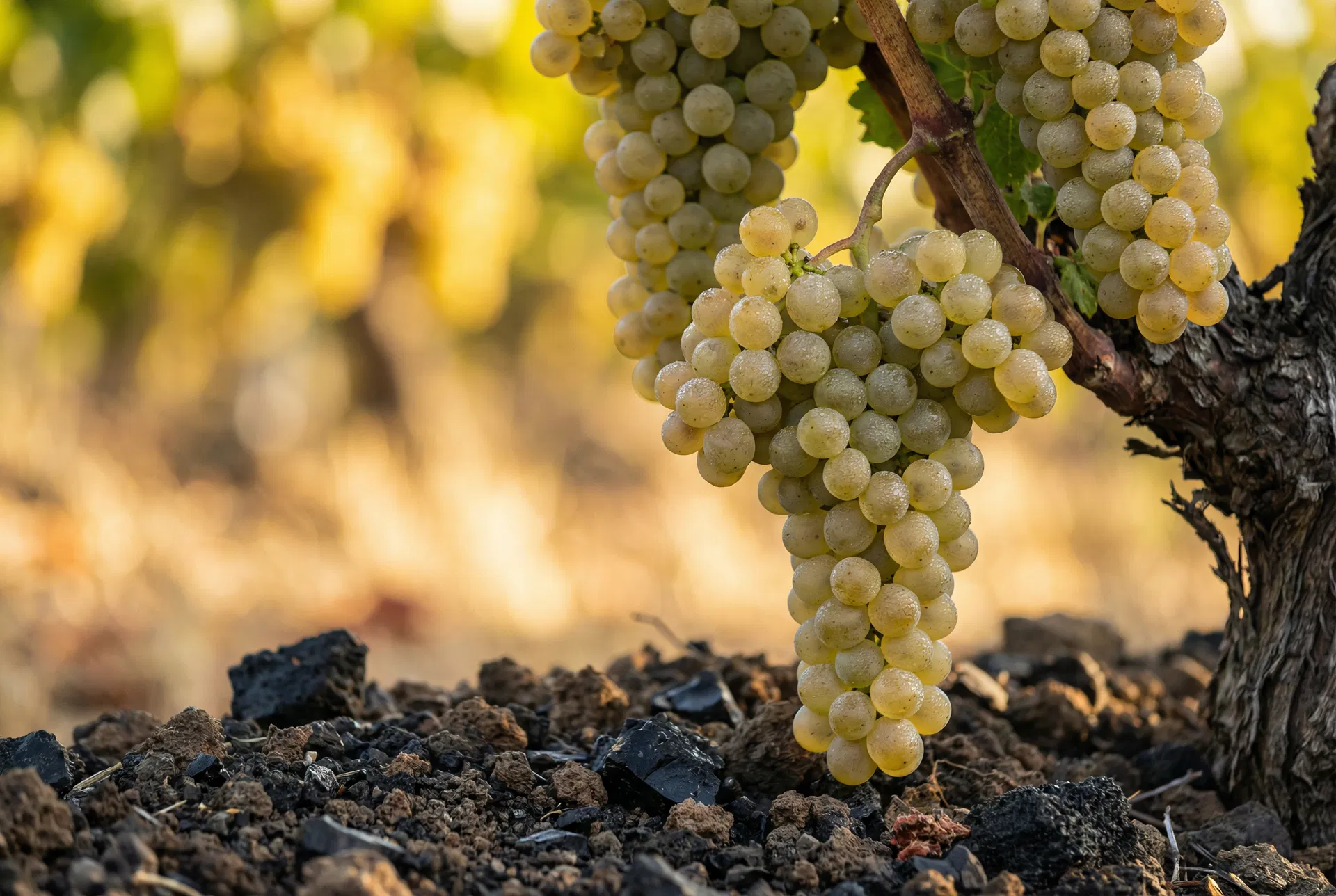
UV radiation triggers the production of flavonoids and other phenolic compounds in grape skins — a defensive response by the vine to protect itself from solar damage. In Sauvignon Blanc, this translates to more concentrated fruit flavors, greater aromatic complexity, and a more structured palate. The vine is, in effect, building more flavor in response to the sun's intensity.
This UV-driven phenolic development is one of the reasons why high-elevation Sauvignon Blanc from Big Valley has a depth and concentration that is unusual for the variety in California. It is fruit that can stand alone as a single-varietal wine or serve as a powerful blending component — qualities that are directly attributable to the elevation at which it is grown.
Coastal Breezes and Diurnal Temperature Variation
Elevation alone does not explain the character of Big Valley Sauvignon Blanc. Equally important is the region's unique airflow pattern. The Mayacamas Mountains, which form the western boundary of Lake County, are pierced by several passes through which afternoon breezes from the Pacific coast funnel into the Big Valley Basin.
These coastal breezes arrive in the afternoon, precisely when temperatures in the vineyard are at their peak. The cooling effect is dramatic — temperatures can drop by 15–20°F within an hour as the marine air pushes inland. This rapid afternoon cooling slows the ripening process, preserving the natural acidity and aromatic compounds that would otherwise be lost to heat.
The result is a diurnal temperature variation — the difference between daytime highs and nighttime lows — that can exceed 35°F during the growing season. This extreme diurnal range is one of the most important factors in producing Sauvignon Blanc with the combination of ripe fruit flavors and bright, refreshing acidity that winemakers seek.
"The gravel seams in Big Valley produce intense and balanced wines — the combination of volcanic soils, high elevation, and lake influence creates a terroir of genuine distinction."Lake County Winegrape Commission
Sourcing High-Elevation Sauvignon Blanc in Northern California
For commercial wineries and artisan producers seeking Sauvignon Blanc wine grapes in Northern California, the Big Valley District AVA represents one of the most compelling sourcing opportunities in the state. The combination of high elevation, volcanic soils, coastal breezes, and lake influence produces fruit with a distinctive character that is difficult to replicate from any other California appellation.
At Quercus Ranch, we have been farming this land for over a century. Our Sauvignon Blanc is grown on approximately 270 sustainably certified acres, farmed with the long-term perspective that comes from generational stewardship of the land. The fruit is presold annually to a select group of producers who recognize the value of Big Valley's unique terroir expression.
If you are sourcing Sauvignon Blanc for a program that values mineral complexity, natural acidity, and genuine terroir character, we invite you to explore what Big Valley has to offer. The elevation advantage is real — and it is expressed in every cluster of fruit we grow.
Quercus Ranch — Big Valley District AVA
~270 acres of sustainably certified Sauvignon Blanc at 1,329 feet elevation in volcanic soils. Presold annually — contact us early to secure your allocation.
Sustainably certified wine grapes and Bartlett pears grown in the volcanic soils of Big Valley Basin for over a century.